Blog · Trusts and Wills
California Probate Threshold 2026: When an Estate Has to Go Through Court
 By Michael Le, licensed agent, CA #0G82966 · · 7 min read

The California probate threshold is $208,850. If someone dies on or after April 1, 2025 and the property they leave in their own name is worth less than that, the family can usually collect it with a sworn form instead of a court case. Go over it, and the estate generally goes through probate.
Here in the Bay Area that number gets crossed fast. One house does it. A paid off condo in Campbell does it. Even a modest brokerage account plus a car can get close. So most families should skip worrying about whether they are over the line and look at what counts toward it, and what they can do now so less of it does.
Quick note on who is talking. opfinances.com is a licensed life insurance and annuity agency in Los Gatos. We are not a law firm and not a financial advisor. This is general education about how the rules work, not legal advice about your estate.
The short version
- The California probate threshold is $208,850 for deaths on or after April 1, 2025. It was $184,500 before that, and it adjusts every three years.
- Only property that would actually pass through probate counts. A living trust, joint tenancy, and accounts with a named beneficiary sit outside it.
- A separate court petition can move a primary home worth up to $750,000 without full probate, but most Santa Clara County homes are worth more than that.
- Probate fees are set by statute on the gross value of the estate, so a $1,000,000 estate means about $23,000 for the attorney and another $23,000 for the executor.
What the California probate threshold actually is.
Probate is the court process that proves a will, pays the debts, and hands out what is left. California lets small estates skip it. The cutoff lives in Probate Code section 13100, and it gets adjusted for inflation every three years.
For deaths on or after April 1, 2025, the cutoff is $208,850. For deaths between April 1, 2022 and March 31, 2025, it was $184,500. The date of death decides which number applies, not the date the family gets around to the paperwork.
Under the line, the people entitled to the property can wait 40 days after the death and then use a small estate affidavit, the Judicial Council form DE-305, to collect it from the bank or whoever is holding it. No judge, no hearing, no statutory fees.
- Deaths on or after April 1, 2025: $208,850
- Deaths from April 1, 2022 to March 31, 2025: $184,500
- Waiting period before the affidavit can be used: 40 days
What counts toward the line, and what does not.
Most people get this part wrong. The California probate threshold is not your net worth. It only counts what would otherwise have to go through probate, which is property titled in the person's name alone with no beneficiary attached.
A lot of a typical estate never touches that number at all. Assets that already have a path to the next person pass outside probate and are left out of the count.
- Property held in a living trust
- Real estate or accounts held in joint tenancy, which go to the surviving owner
- Retirement accounts and IRAs with a named, living beneficiary
- Bank and brokerage accounts with a payable on death or transfer on death designation
- Life insurance with a named, living beneficiary
- Property that passes to a surviving spouse, which has its own simpler court process
The beneficiary form is doing more work than the will.
A will does not keep anything out of probate. It just tells the probate court who gets what. The beneficiary form on a life insurance policy or an IRA is what actually moves money straight to a person. That is why we spend real time on beneficiary designations when we review a life insurance policy, and why naming your estate as the beneficiary quietly pulls that money back into court.
The house problem, and the $750,000 petition.
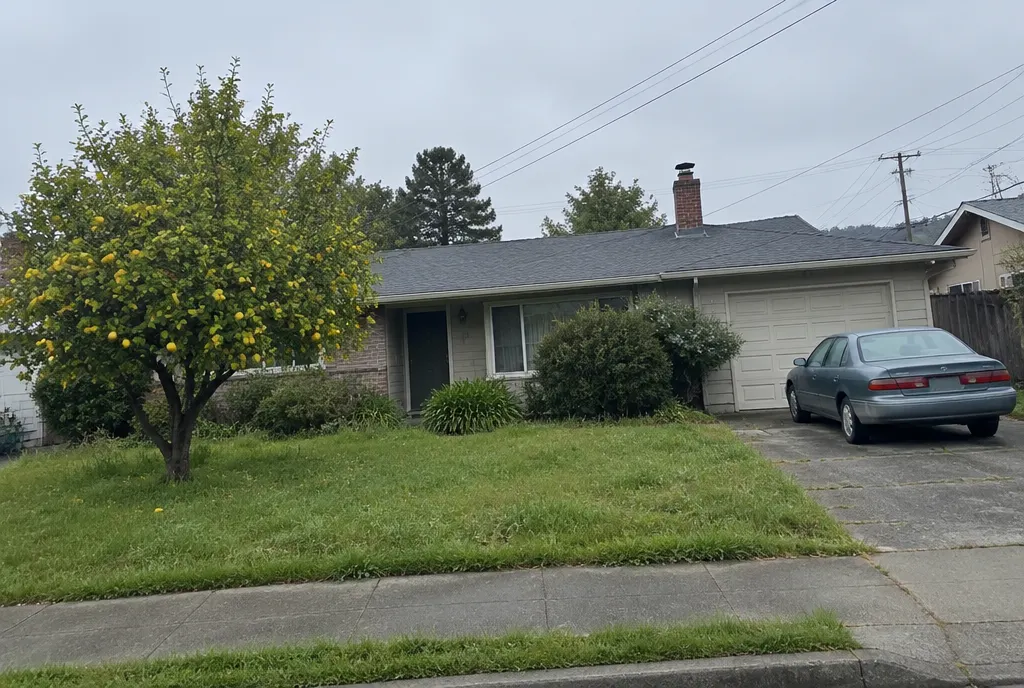
Real estate is what pushes almost every Bay Area estate over the California probate threshold. A home in Los Gatos, Saratoga or San Jose titled in one person's name is, by itself, far past $208,850.
Since the April 2025 changes, there is a middle path for the family home. Probate Code section 13151 lets the heirs petition the court to transfer a primary residence worth up to $750,000 without a full probate case. It still means a court filing and notice to every heir, and it cannot be filed until 40 days after the death. But it is much shorter and cheaper than full administration.
The catch for this area is obvious. Most single family homes in Santa Clara County are worth well over $750,000, so a lot of local families do not qualify. If your house is titled in your name alone and there is no trust, plan on probate for it. Also keep the tax side in mind: inherited property usually gets a new cost basis, which we cover in do children get a step up in basis when they inherit a house in California.
What probate costs once you are over the threshold.
California is one of the few states that sets probate fees by statute. Under Probate Code section 10810, the attorney and the executor are each entitled to a percentage of the gross value of the estate. Gross means before the mortgage is paid off. A house worth $1,200,000 with a $700,000 loan is still a $1,200,000 estate for fee purposes.
The schedule is 4 percent of the first $100,000, 3 percent of the next $100,000, 2 percent of the next $800,000, and 1 percent of the next $9,000,000. Run a $1,000,000 estate through it and you get $23,000 for the attorney and another $23,000 for the executor, about $46,000 together before court costs and any extra work the court approves.
Time is the other cost. A straightforward California probate commonly takes nine months to a year and a half, and the house usually cannot be sold or refinanced freely while it is open. If the heirs are also dealing with the person's bills, our page on whether children inherit a parent's debt walks through what creditors can and cannot reach.
Ways families keep assets under the line.
You are not stuck with any of this. Most of the work is boring paperwork done ahead of time, and it adds up. Each item below takes something out of the probate count.
- A revocable living trust that actually holds the house and the larger accounts. An unfunded trust does nothing.
- Payable on death and transfer on death designations on bank and brokerage accounts.
- Current beneficiary forms on every life insurance policy, annuity, 401(k) and IRA, with a backup beneficiary named.
- A revocable transfer on death deed for a home, which California allows through January 1, 2032 under current law.
- A pour over will as a backstop, so anything left out still lands in the trust.
Which one fits depends on the family.
A transfer on death deed is cheap but has limits a trust does not, like handling a beneficiary who dies first or a family that disagrees. A trust costs more up front and needs to be maintained. This is exactly the kind of choice an estate planning attorney should make with you. Our job ends at making sure the insurance and annuity side points the money where your plan says it should go.
What to do this week.
Pull a list of everything you own and write next to each item how it is titled and whether it has a beneficiary. Anything in your name alone with no beneficiary is what counts toward the California probate threshold.
Then check the beneficiary forms. People are always surprised how many are blank, name an ex spouse, or name a parent who has passed. It takes an afternoon and it is free. If life insurance is part of the picture, our guide to how much life insurance you need helps you size it before you name who gets it.
FAQ
Questions people ask.
What is the California probate threshold in 2026?
For deaths on or after April 1, 2025, it is $208,850 of property that would otherwise go through probate. It adjusts every three years, so the next change is expected in 2028.
Does a house count toward the California small estate limit?
Yes, if it is titled in the person's name alone and not in a trust or joint tenancy. A separate court petition can transfer a primary residence worth up to $750,000, but it still requires a filing.
Does life insurance count toward the probate threshold?
Not when a living beneficiary is named. The death benefit is paid straight to that person. If the estate is the beneficiary, or every named beneficiary has died, it can end up in probate.
How long do you have to wait to use a small estate affidavit in California?
At least 40 days after the death. The form is the Judicial Council DE-305, and it is given to whoever holds the property, such as a bank, rather than filed with the court.
Getting it done
Getting the documents in place.
Reading about a will or a trust does not put one in place. If you want an attorney to draft or review your will, living trust, or power of attorney, a LegalShield membership gives you access to a provider law firm for a flat monthly fee instead of an hourly bill. You can also call with a question before it turns into a problem.
Disclosure: Michael Le, the licensed agent behind opfinances.com, is also an independent LegalShield associate and may earn a commission if you enroll. LegalShield is not a law firm; it provides access to legal services offered by independent provider law firms. On Point Finances is not a law firm and does not give legal advice. Plan prices and coverage vary by state.
Where this fits.
This post covers one piece of a bigger plan. Life Insurance walks through the whole decision, and the answer library takes the follow up questions one at a time.
On Point Finances is a licensed insurance agency, not a tax, legal, or investment adviser. This post is general education, not a recommendation, and reading it does not create a client relationship.
Sources
- Sacramento County Public Law Library: how much can be transferred using small estate methods
- California Probate Code section 13100, small estate affidavit
- California Probate Code section 13151, primary residence petition
- California Probate Code section 10810, statutory attorney fees
- Judicial Council form DE-305, affidavit for collection of personal property
Checked October 31, 2026. Rules and limits change; confirm current figures with the source or your own tax or legal professional before acting.